Photographs don’t just capture faces and places—they crystallize moments of diplomacy, soft power, and cultural bridge-building. As King Charles III embarks on a state visit to the United States, the lens turns once again to a long-standing tradition: British royals traversing the Atlantic to strengthen ties with one of the world’s most powerful democracies. These visits, documented in thousands of still images, reveal more than fashion and formalities. They tell the story of a monarchy adapting, engaging, and sometimes charming its way through American public opinion.
From the first royal tour during a world war to modern-day climate advocacy, each journey has been shaped by its moment—and preserved in photographs that now define history.
The Power of a Royal Photo Op in American Media
In the United States, image is influence. The British royal family understands this better than most. Their visits to America have always been carefully orchestrated, not just for diplomatic effect but for visual impact. A handshake with a president, a wave from a motorcade, a laugh shared with schoolchildren—these are the frames that newspapers, magazines, and now social media amplify.
Consider the 1981 visit of Prince Charles and Princess Diana to New York. A now-legendary photo shows Diana laughing on the steps of the Statue of Liberty, the crown of Lady Liberty framing her joyful expression. That single image, reproduced endlessly, helped cement her status as a global icon. It wasn’t just a visit—it was a media event shaped by photography.
Royal visits are planned down to the minute, with photo opportunities scheduled like press releases. The goal? To generate visuals that humanize the monarchy, soften its imperial legacy, and align it with American values—accessibility, resilience, service.
King Charles III: Continuing a Diplomatic Legacy
King Charles III’s state visit arrives at a pivotal moment. The UK seeks renewed global partnerships post-Brexit, and the US remains a critical ally. But Charles also carries the weight of public scrutiny—both in Britain and abroad. His environmental activism, once seen as eccentric, now positions him as a timely voice on climate issues, a theme likely to feature prominently in official events.
Photographs from his visit will be parsed for more than protocol. A relaxed moment with President Biden, a heartfelt exchange with climate activists, or a solemn tribute at a war memorial—each image will contribute to a narrative: Is the British monarchy still relevant in 21st-century diplomacy?
Early images from his 2023 trip to California—meeting wildfire survivors, addressing policymakers in San Francisco—were shared widely. They showed an engaged, weathered monarch, more activist than ceremonial. If the state visit builds on that tone, the resulting photos may redefine how Americans see the crown.
Queen Elizabeth II: The Defining Royal Presence
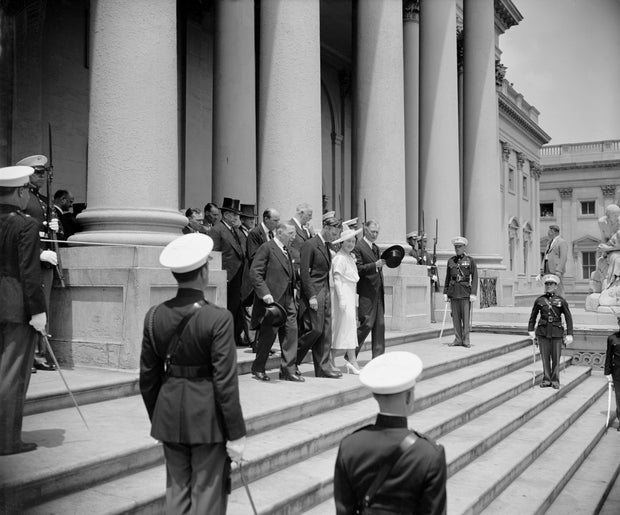
No royal has visited the US more often—or been photographed more extensively—than Queen Elizabeth II. Her first trip, in 1957, was a Cold War-era masterstroke. At the height of US-Soviet tensions, her presence at a joint session of Congress sent a clear message: Britain stood firmly with America.
Photographs from that trip show a young queen, poised and regal, addressing lawmakers in the Capitol. The image is formal, but the subtext was emotional: a shared history, a common language, a wartime alliance now evolving into a peacetime partnership.
:max_bytes(150000):strip_icc():focal(728x275:730x277)/princess-catherine-prince-william-donald-trump-king-charles-iii-trump-state-visit-uk-windsor-091725-8672599a27214b6f8ffdbb07fd7596e4.jpg)
Over the decades, Elizabeth returned nine more times. Each visit layered new imagery into the American consciousness:
- 1976: Bicentennial celebrations in Philadelphia. A smiling Queen in a red coat reviewing troops alongside President Ford. The photo, widely published, balanced respect for American independence with enduring Anglo-American friendship.
- 1991: Visiting troops during the Gulf War. A rare wartime trip, captured in stark, dignified images—her presence a morale booster for British and American forces alike.
- 2007: A final state visit marking the 400th anniversary of Jamestown. By then, the photos showed a more reflective monarch, her expressions measured, her gestures symbolic.
Through it all, the camera documented not just a queen, but a constant in a changing world.
Prince William and Kate: The New Generation’s Approach
When Prince William and Catherine, Princess of Wales, toured the US in 2011 and again in 2014, the photographic tone shifted. Less ceremonial, more relatable. The couple visited inner-city schools, met military families, and even joined a Zumba class in Los Angeles—images that played well in a culture that values informality.
One standout photo from 2014 shows Kate laughing as she tries a taco at a food truck in Arizona. It’s unscripted, warm, and widely shared. These moments aren’t accidents. They reflect a calculated effort to modernize the monarchy’s image through authenticity.
Their 2023 trip to Boston for the Earthshot Prize was different again—focused on climate innovation. Photographs showed William in a lab coat, examining sustainable technology. The message? This isn’t just a royal family touring cities—it’s one positioning itself at the center of global solutions.
The optics matter. In a country skeptical of inherited privilege, images of working royals—engaged, curious, humble—can shift perception.
The Unseen Impact of Royal Visit Photographs
Not every photo from a royal visit is front-page news. But collectively, they shape legacy. Consider these less obvious effects:
- Soft Power Diplomacy: Images of royals at cultural events—jazz clubs, Broadway shows, Native American reservations—signal respect for American diversity. A 1998 photo of Prince Charles listening intently to a Navajo elder in Arizona was quietly powerful, challenging stereotypes of royal detachment.
- Crisis Moments: After 9/11, Queen Elizabeth ordered “The Star-Spangled Banner” played at Buckingham Palace—a gesture captured in photos and news clips. The image of the Union Jack and Stars and Stripes flying side by side became a global symbol of solidarity.
- Public Relations Redemption: After Diana’s death, royal visits to the US helped rebuild the family’s image. William and Harry’s 2014 trip to New York to honor first responders was steeped in symbolism, with photos showing the princes embracing firefighters—a visual atonement of sorts.
Photographs, in these cases, aren’t just records. They’re strategic tools.
How Photographers Shape Royal Narratives
Behind every iconic royal image is a team of photographers—official, press, paparazzi—each with different motives. The royal household releases tightly controlled images, often through PA Media or Reuters, ensuring quality and message alignment. These are the posed, polished shots: bows, salutes, ribbon cuttings.
But the most memorable images often come from the sidelines. A candid laugh. A child reaching out to touch a royal’s coat. A moment of fatigue captured between events. These unguarded photos humanize figures who otherwise seem untouchable.
:max_bytes(150000):strip_icc():focal(749x0:751x2)/king-charles-III-state-visit-of-the-president-of-the-republic-of-south-africa-112222-4-806910a78d3444cf87ef8dcb828390e0.jpg)
American photojournalists have long played a role in this. Look at the work of Diana Walker, former White House photographer for Time, who captured Queen Elizabeth’s 1991 visit to Washington. Her images focused on subtle gestures—the Queen’s hand on a veteran’s shoulder, her eyes scanning a memorial wall. Intimate, not imperial.
Today, with smartphones and social media, the public also contributes. A tourist’s blurry photo of Charles waving from a motorcade can go viral. The monarchy no longer controls the narrative—only influences it.
From Protocol to Perception: What the Photos Reveal
Royal visits follow strict protocol. But the photographs reveal what scripts cannot: emotion, fatigue, connection, or its absence.
- A tight smile during a speech? Might suggest discomfort.
- A prolonged handshake with a child? Signals warmth.
- Standing too close to a president? Could imply familiarity—or overreach.
These nuances are decoded instantly in the digital age. During Prince Harry’s 2018 visit with Meghan Markle, photos of their interactions with President Trump were scrutinized for tension. None showed real friction, but the careful distance between them sparked speculation.
In contrast, images of Queen Elizabeth and Ronald Reagan laughing at a White House dinner in 1982 projected ease and alliance. Their friendship, visible in photographs, became part of Cold War lore.
The camera doesn’t lie—but it selects. And what it selects becomes history.
Closing the Chapter, One Frame at a Time
As King Charles III walks the same streets once visited by his mother, his grandfather, and cousins, the photographs will tell a new chapter of an old story. They’ll reflect not just a state visit, but a monarchy in transition—grappling with relevance, legacy, and public trust.
These images do more than decorate news feeds. They preserve diplomacy in its most human form: a wave, a pause, a shared moment between nations.
For those covering or consuming the visit, the advice is simple: look beyond the ceremony. Study the expressions, the gestures, the spaces between the poses. That’s where the truth—and the history—lives.
Actionable Insight: When analyzing royal visit photos, ask: Who initiated the contact? Where is the eye line directed? What’s outside the frame? These details often reveal more than the official caption.
FAQ
Why are royal visits to the US often photographed so extensively? Royal visits blend diplomacy, media, and public interest. Photos serve both historical documentation and strategic image-building for the monarchy.
Did Queen Elizabeth II visit the US during the Cold War? Yes—her 1957 visit occurred at the height of Cold War tensions, and her address to Congress was a symbolic reinforcement of the US-UK alliance.
How does King Charles III’s visit differ from past royal trips? His focus on climate change and sustainability marks a shift from ceremonial visits to issue-driven diplomacy, reflected in event choices and photo ops.
Have any royal visits faced criticism in the US? Yes—some visits were seen as tone-deaf, such as during economic downturns. Photos of lavish events can spark backlash if perceived as out of touch.
What role do social media photos play in modern royal visits? They democratize access, allowing real-time public engagement. Unofficial images can go viral, sometimes overshadowing official releases.
Are there restrictions on photographing royal visits? Yes—security zones and media pens limit access. However, public interactions often yield spontaneous photos from bystanders.
Which royal visit generated the most iconic photos? Princess Diana’s 1981 trip, especially her Statue of Liberty moment, remains one of the most photographed and reproduced royal tours in US history.
FAQ
What should you look for in Royal Moments: British Monarchs in the US Through Photographs? Focus on relevance, practical value, and how well the solution matches real user intent.
Is Royal Moments: British Monarchs in the US Through Photographs suitable for beginners? That depends on the workflow, but a clear step-by-step approach usually makes it easier to start.
How do you compare options around Royal Moments: British Monarchs in the US Through Photographs? Compare features, trust signals, limitations, pricing, and ease of implementation.
What mistakes should you avoid? Avoid generic choices, weak validation, and decisions based only on marketing claims.
What is the next best step? Shortlist the most relevant options, validate them quickly, and refine from real-world results.